
A daily routine can make a big difference in a preschool child's life. Young children feel more comfortable when they know what is going to happen next. A simple routine helps them understand when it is time to wake up, eat, play, learn, rest, and sleep.
A good routine is not about making every minute of the day strict. It is about creating a healthy pattern that gives children enough time for learning, play, rest, family time, and sleep.
For parents, a daily routine can also make mornings and evenings easier. Children slowly learn to do simple tasks on their own and become more responsible.
In this article, we will explain how parents can create a healthy and practical daily routine for preschool children.
Why Is a Daily Routine Important for Preschool Children?
Preschool children are still learning how to manage their time and daily activities. A regular routine gives them a sense of safety and stability.
A good routine can help children:
- Sleep better
- Eat meals on time
- Become more independent
- Develop healthy habits
- Improve concentration
- Manage transitions more easily
- Prepare for school
- Understand responsibility
When children know what comes next, they may feel less confused and more confident.
1. Start the Day at the Same Time
Try to keep your child's wake-up time similar every day.
For example, if your child usually wakes up around 7:00 AM, try to maintain a similar schedule on most days.
After waking up, encourage simple habits such as:
- Brushing teeth
- Washing the face
- Using the toilet
- Getting dressed
- Making the bed with help
These small activities teach children independence.
2. Make Breakfast a Regular Habit
Breakfast gives children energy for the morning.
Try to provide a simple and balanced breakfast that includes nutritious foods. Depending on your child's needs and preferences, this could include foods such as fruit, milk, yogurt, eggs, whole grains, or other healthy options.
Avoid making breakfast a rushed experience.
Sitting together for breakfast also gives parents an opportunity to talk with their children before the school day begins.
3. Keep a Fixed Preschool Schedule
Children benefit from knowing when it is time to go to preschool.
Create a simple morning routine:
Wake up → Get ready → Breakfast → Pack the bag → Go to school
Try to prepare school bags, clothes, and other items the night before. This can reduce morning stress.
4. Include Learning Time
Preschool children do not need long study sessions at home.
Instead, include short and enjoyable learning activities.
For example:
- Reading a story
- Practicing letters
- Counting objects
- Drawing
- Coloring
- Puzzles
- Matching games
- Building blocks
Keep these activities fun. If a child becomes tired or loses interest, give them a break.
5. Give Plenty of Time for Free Play
Free play is an important part of childhood.
Children should have time to choose what they want to play with without adults controlling every activity.
They can:
- Build with blocks
- Play with toys
- Draw
- Pretend to be a doctor or teacher
- Play with dolls
- Create stories
- Explore safely outdoors
Free play supports creativity, imagination, communication, and problem-solving.
6. Add Outdoor Physical Activity
Children need regular physical movement.
Outdoor play can include:
- Running
- Jumping
- Cycling
- Ball games
- Walking
- Playing in a park
Physical activity helps children develop coordination, balance, strength, and confidence.
It can also help them use their energy in a healthy way.
7. Set Regular Meal and Snack Times
A regular meal schedule helps children understand when it is time to eat.
Try to maintain consistent times for:
- Breakfast
- Morning snack
- Lunch
- Evening snack
- Dinner
Offer healthy food choices and allow children to develop good eating habits.
Parents should also encourage children to drink enough water during the day.
8. Include Quiet Time
Preschool children can become tired after school and active play.
Quiet time gives them an opportunity to relax.
Quiet activities can include:
- Looking at picture books
- Drawing
- Listening to soft music
- Puzzles
- Simple crafts
Some children may need an afternoon nap, while others may simply need some quiet time.
Pay attention to your child's individual needs.
9. Create a Simple Evening Routine
Evenings should gradually become calmer.
A simple routine could be:
Dinner → Family time → Story → Brush teeth → Bedtime
Try to avoid exciting games just before bedtime.
A calm evening routine helps children understand that the day is coming to an end.
10. Maintain a Healthy Bedtime
Sleep is extremely important during early childhood.
Preschool children generally need a significant amount of sleep each day, including nighttime sleep and, for some children, naps.
A regular bedtime can make it easier for children to get enough rest.
Before bed, try:
- Turning off screens
- Diming bright lights
- Reading a short story
- Talking about the day
- Following the same bedtime steps
A calm bedroom can also help children settle down.
Example of a Simple Preschool Daily Routine
Every child is different, so parents can adjust the timing according to their child's school schedule and needs.
7:00 AM – Wake up and get ready7:30 AM – Breakfast8:00 AM – Prepare for school8:30 AM–12:30 PM – Preschool1:00 PM – Lunch1:30 PM – Rest or nap3:00 PM – Snack and free play4:00 PM – Outdoor activity5:00 PM – Creative or learning activity6:30 PM – Family time7:30 PM – Dinner8:00 PM – Story and bedtime routine8:30–9:00 PM – Bedtime
This is only an example. Parents should adjust the routine according to the child's age, school timings, sleep needs, and family schedule.
How to Make Children Follow a Routine
Some children may not follow a new routine immediately. This is completely normal.
Parents can make the process easier by introducing changes slowly.
Use Simple Instructions
Instead of giving many instructions at once, give one simple instruction at a time.
For example:
"First, put your toys away."
Then:
"Now let's brush your teeth."
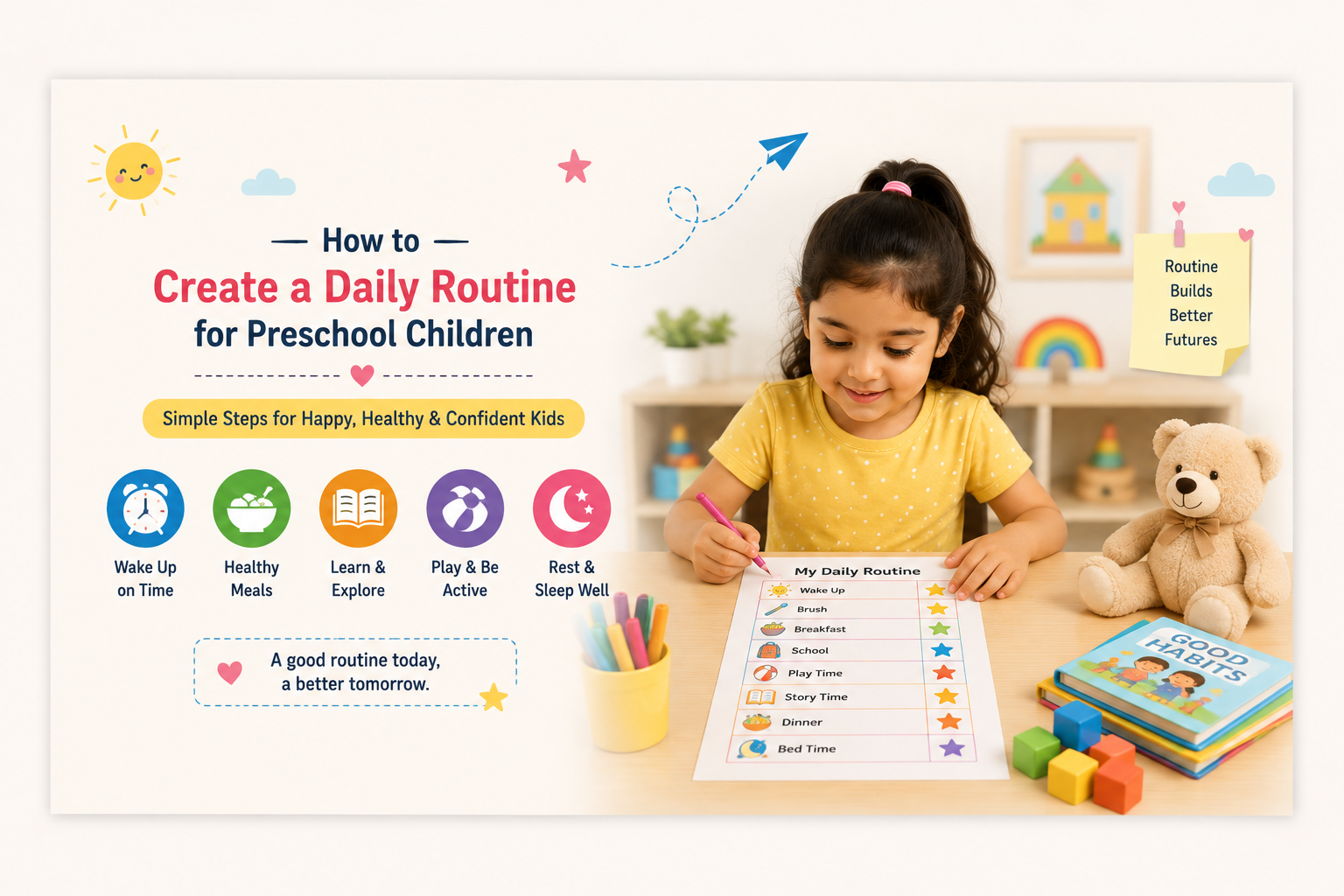
Use Visual Charts
A picture-based routine chart can be very helpful for young children.
You can use pictures showing:
- Wake up
- Brush teeth
- Breakfast
- School
- Play
- Dinner
- Story
- Sleep
Children can look at the chart and understand what comes next.
Give Children Small Choices
Allow children to make simple choices.
For example:
"Do you want the red shirt or the blue shirt?"
This gives children a feeling of independence while keeping the routine on track.
Praise Good Habits
When your child follows the routine, appreciate the effort.
Simple words such as "Well done!" or "You got ready by yourself today!" can encourage positive behavior.
Do Not Make the Routine Too Strict
A routine should provide structure, not pressure.
There will be days when the schedule changes because of:
- Family events
- Holidays
- Travel
- Illness
- Special school activities
That is completely normal.
The goal is to create a consistent pattern while allowing some flexibility.
The Role of Parents in Building Healthy Habits
Parents play an important role in teaching children daily habits.
Children learn by watching adults.
When parents follow healthy habits themselves, children are more likely to copy them.
For example, parents can:
- Eat healthy meals
- Read books
- Exercise regularly
- Keep regular sleep times
- Limit unnecessary screen use
- Spend quality family time together
A positive home environment supports healthy child development.
How Preschool Supports a Child's Daily Routine
A good preschool also helps children develop daily habits.
At BIPS Preschool, children get opportunities to learn through structured activities, play, creativity, social interaction, and age-appropriate routines.
A consistent school routine can help children understand:
- When to learn
- When to play
- When to eat
- When to work with others
- When to clean up
- When to rest
These habits can support a child's transition from preschool to primary school.
 Final Thoughts
Creating a daily routine for a preschool child does not have to be difficult. The most important thing is to create a simple and predictable pattern that includes sleep, healthy meals, learning, play, physical activity, family time, and rest.
Remember that every child is different. Some children adjust quickly, while others need more time.
Be patient, keep the routine simple, and make daily activities enjoyable. With regular support from parents and teachers, children can gradually develop healthy habits and greater independence.
Frequently Asked Questions
What is a good daily routine for a preschool child?
A good routine should include regular sleep, meals, preschool, learning activities, free play, outdoor activity, family time, and relaxation.
What time should a preschool child wake up?
The wake-up time should allow the child to get enough sleep and reach preschool without rushing. Keeping a similar wake-up time each day can help establish a healthy routine.
How many hours should a preschool child sleep?
Sleep needs vary by age and the individual child. Parents should follow age-appropriate sleep recommendations and look for signs that their child is not getting enough rest.
Should preschool children take an afternoon nap?
Some preschool children still need a nap, while others do not. Parents should consider their child's energy levels and nighttime sleep when deciding whether a nap is helpful.
How much screen time should preschool children have?
Parents should set age-appropriate limits and make sure screen use does not replace sleep, physical activity, family interaction, reading, and hands-on play.
How can I make my child follow a daily routine?
Start with a few simple activities, follow them consistently, use visual charts, give small choices, and praise your child's efforts.
What should a preschool child do after coming home from school?
Give the child some time to relax and have a snack. After that, include free play, outdoor activity, creative learning, family time, dinner, and a calm bedtime routine.
Why is routine important for child development?
A regular routine helps children understand expectations, develop healthy habits, become more independent, and feel secure.
Should the routine be the same every day?
It is helpful to keep the main parts of the routine consistent, but there should also be flexibility for weekends, holidays, family events, and other changes.
How can parents prepare children for the preschool routine?
Parents can practice waking up, getting dressed, eating breakfast, packing a bag, following simple instructions, cleaning up toys, and maintaining a regular bedtime before preschool starts.