
The early years of a child’s life are very important for learning and brain development. During the first five years, a child’s brain grows very fast. This is the time when children start learning how to think, speak, understand, and explore the world around them.
That is why preschool education plays a very important role in a child’s development. Good preschool activities help children improve memory, creativity, communication, problem-solving skills, and confidence.
Parents today look for schools that focus on learning through activities instead of only classroom teaching. In this article, we will discuss the best preschool activities that help improve brain development and why these activities are important for young children.
Why Brain Development Matters in Early Childhood
A child learns more during the first five years than at any other stage of life.
During early childhood, the brain develops skills related to:
- Speaking and communication
- Memory and learning
- Motor skills
- Social interaction
- Creativity
- Problem solving
- Emotional understanding
This is why children need the right activities at an early age.
Preschools that provide activity-based learning help children learn naturally while having fun.
1. Puzzle Activities Improve Thinking Skills
Puzzles are one of the best activities for young children.
Simple puzzles help children learn:
- Problem solving
- Logical thinking
- Shape recognition
- Memory improvement
- Concentration
Children enjoy solving puzzles, and it helps the brain think faster.
Montessori schools often use puzzle games as part of daily learning.
2. Building Blocks Improve Creativity
Building blocks are a great way to improve brain development.
When children play with blocks, they learn:
- Hand and eye coordination
- Creative thinking
- Balance and structure understanding
- Focus and concentration
Children use imagination while creating different shapes and structures.
This improves brain activity naturally.
3. Drawing and Coloring Improve Creativity
Art activities are very important for preschool children.
Drawing and coloring help children improve:
- Creativity
- Imagination
- Hand movement control
- Focus and patience
It also allows children to express their feelings freely.
Simple coloring activities improve both brain development and motor skills.
4. Storytelling Improves Language Skills
Listening to stories helps children improve communication and understanding.
Storytelling helps children learn:
- New words
- Better listening habits
- Sentence formation
- Memory improvement
- Imagination skills
Children enjoy stories and learn faster when education feels fun.
Reading picture books also helps improve learning ability.
5. Music and Rhymes Improve Memory
Children naturally enjoy songs and rhymes.
Music activities help improve:
- Memory power
- Listening skills
- Speech development
- Emotional development
- Learning rhythm and sound patterns
Preschool children often remember information faster when learning through songs.
This makes music an important part of early learning.
6. Clay Modeling Improves Motor Skills
Playing with clay helps children improve hand movement and creativity.
Benefits include:
- Finger strength development
- Better hand control
- Creative thinking
- Shape recognition
- Sensory development
Children enjoy making shapes while learning through touch and movement.
This activity is very common in Montessori learning.
7. Outdoor Play Helps Overall Development
Outdoor activities are important for physical and mental growth.
Outdoor play helps improve:
- Body balance
- Muscle strength
- Social skills
- Confidence building
- Teamwork habits
Activities like running, jumping, and simple games help children stay active.
Healthy physical activity supports healthy brain development.
8. Sorting Games Improve Observation Skills
Sorting games help children learn to identify objects by size, shape, or color.
This helps improve:
- Observation skills
- Logical thinking
- Decision making
- Pattern recognition
Children learn to compare and organize objects.
This improves early thinking ability.
9. Role Play Activities Build Confidence
Pretend play activities are excellent for learning social skills.
Examples include:
- Playing teacher
- Doctor role play
- Kitchen activities
- Shopping activities
Role play helps children improve:
- Communication skills
- Confidence
- Creativity
- Social understanding
It also helps children understand everyday situations.
10. Sensory Activities Improve Learning Ability
Sensory play helps children learn through touch, sound, smell, and movement.
Examples include:
- Water play
- Sand play
- Texture activities
- Sound recognition games
Sensory learning improves brain connections and helps children understand the world better.
Why Activity-Based Learning Is Better for Preschool Children
Young children learn faster when they enjoy the learning process.
Activity-based learning helps children:
- Stay interested
- Learn naturally
- Improve confidence
- Build curiosity
- Develop creativity
- Learn without pressure
This is why Montessori education focuses on practical activities instead of only classroom teaching.
How Parents Can Support Brain Development at Home
Parents can also help children learn better by:
- Reading books daily
- Playing simple puzzle games
- Encouraging drawing and coloring
- Talking with children regularly
- Allowing outdoor play
- Limiting mobile screen time
- Encouraging creative activities
Small daily activities make a big difference.
Final Thoughts
The first five years are the most important stage for brain development.
Children learn best when education is fun, creative, and activity based.
Activities like puzzles, music, storytelling, outdoor games, building blocks, and sensory learning help children improve memory, confidence, creativity, and thinking skills.
Choosing a preschool that focuses on activity-based learning gives children a strong foundation for future success.
This is why many parents today prefer Montessori learning methods for early childhood education.
Frequently Asked Questions (FAQs)
Why are preschool activities important for brain development?
Preschool activities improve memory, creativity, communication, and thinking skills during early childhood.
Which activities improve child brain development the most?
Puzzles, storytelling, music, building blocks, drawing, and outdoor play are very helpful.
At what age does brain development happen fastest?
The first five years of life are the most important for brain growth.
Is activity-based learning better for preschool children?
Yes, children learn faster when learning feels fun and interactive.
Why do Montessori schools focus on practical activities?
Montessori learning helps children develop confidence, independence, creativity, and problem-solving skills.
Can parents improve brain development at home?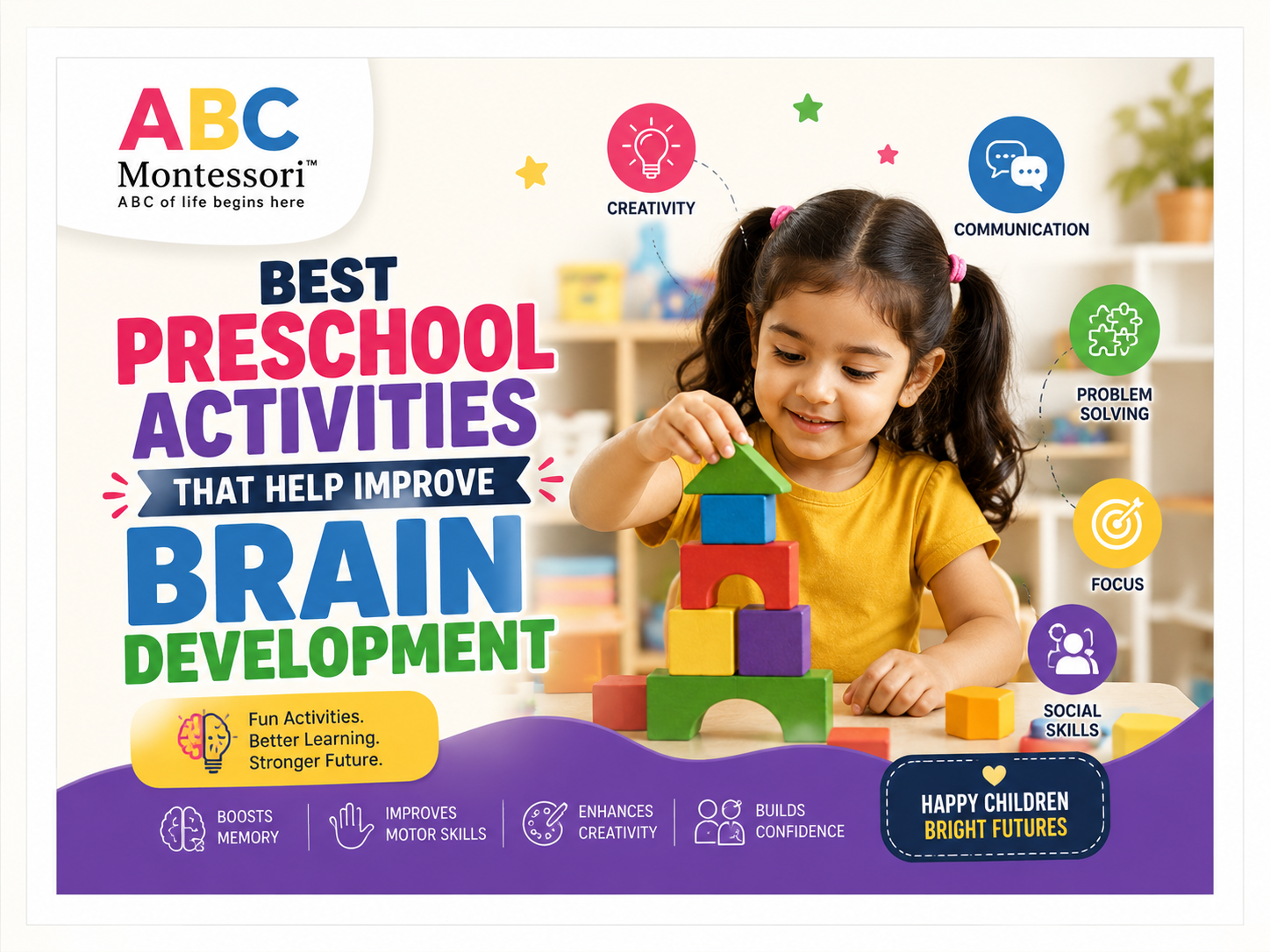
Yes, reading books, puzzle games, creative play, and communication help children learn better.