
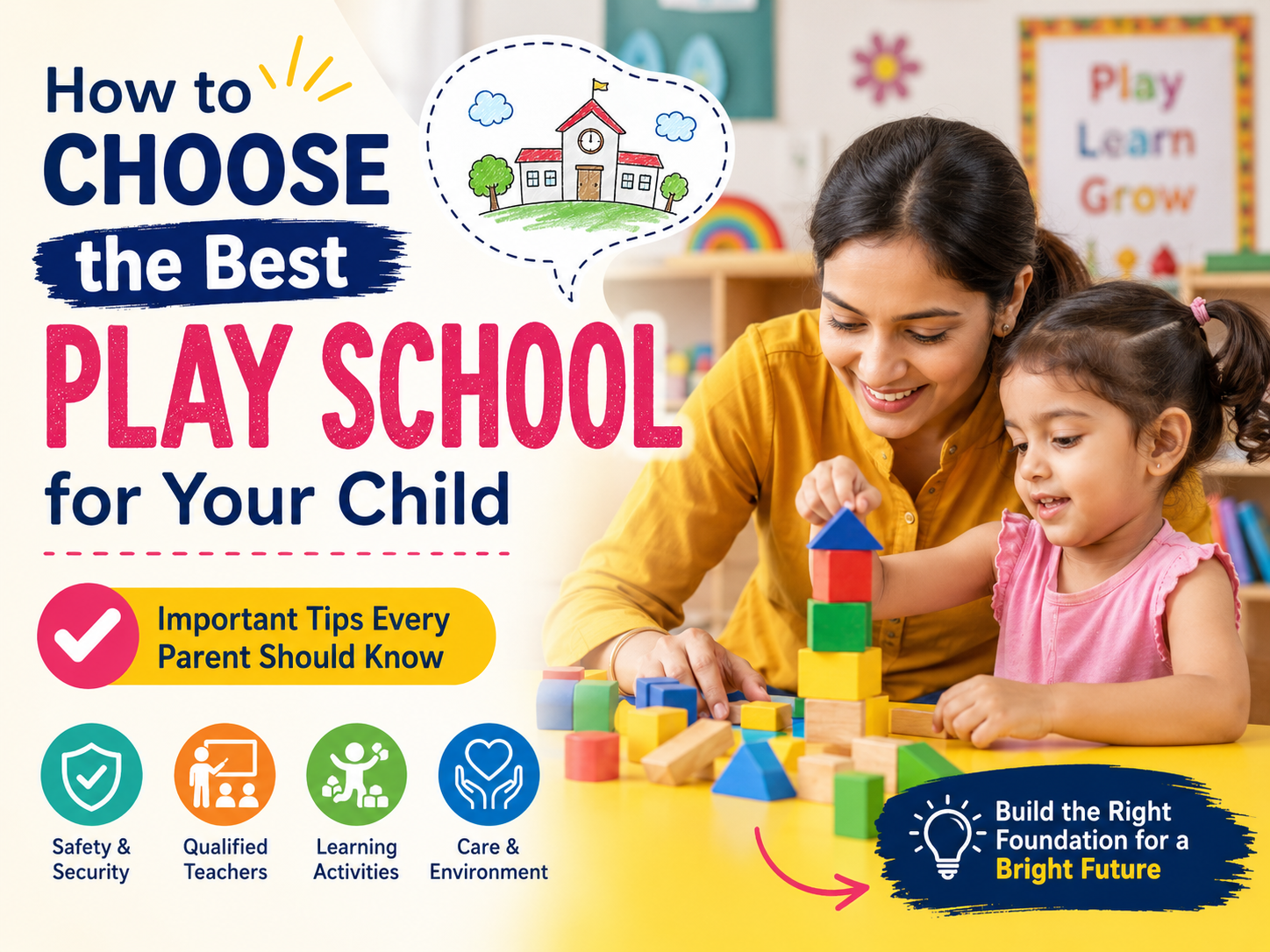
Choosing the right play school is one of the most important decisions for parents. A good preschool helps children learn, grow, and develop confidence from an early age. It is the first step of a child’s educational journey. Therefore, parents should carefully select a school that provides a safe, caring, and positive learning environment.
Today, many parents search for the best play school in India that focuses on child development, creativity, and modern learning methods. However, with so many options available, choosing the right preschool can feel confusing. This guide will help parents understand what to check before taking preschool admission.
Why Play School Education is Important
Early childhood education plays a major role in a child’s mental, emotional, and social growth. During the early years, children learn quickly through activities, games, music, storytelling, and interaction with teachers and friends.
A quality play school helps children:
- Develop communication skills
- Improve creativity and imagination
- Learn discipline and routines
- Build confidence and independence
- Improve social interaction
- Prepare for formal schooling
Children who attend a good preschool often adapt better to primary school and become more active learners.
1. Check the School Environment
The environment of a play school should be safe, clean, friendly, and child-focused. Children spend many hours at school, so the atmosphere should make them feel comfortable and happy.
Parents should visit the school personally and check:
- Classroom cleanliness
- Safe furniture and toys
- Proper ventilation and lighting
- CCTV security
- Hygiene standards
- Safe play area
A colorful and activity-based environment keeps children engaged and excited to learn.
2. Understand the Teaching Method
Every preschool follows a different teaching style. Many parents today prefer Montessori education because it focuses on practical learning and independent thinking.
A good teaching method should encourage:
- Activity-based learning
- Creativity and imagination
- Hands-on experiences
- Communication skills
- Emotional development
Instead of only books and writing work, children should learn through games, puzzles, storytelling, art, dance, and interactive activities.
3. Check Teacher Qualification and Behaviour
Teachers play a very important role in early childhood education. Young children need caring, patient, and trained teachers who understand child psychology.
Before choosing a play school, parents should know:
- Are the teachers trained in preschool education?
- Do teachers behave politely with children?
- Is the student-teacher ratio balanced?
- Do teachers give personal attention?
Good teachers help children feel safe and comfortable in school.
4. Focus on Safety and Security
Safety is one of the biggest concerns for parents. A preschool should have strong security measures to ensure children remain safe at all times.
Important safety features include:
- CCTV cameras
- Secure entry and exit gates
- Female support staff
- Verified staff members
- First aid facilities
- Emergency contact system
Parents should never compromise on child safety while selecting a preschool.
5. Check Learning Activities
Children learn best through fun and creative activities. A good play school should include both indoor and outdoor learning activities.
Look for schools that offer:
- Art and craft
- Dance and music
- Storytelling sessions
- Coloring activities
- Puzzle games
- Physical activities
- Outdoor play time
These activities improve brain development and help children stay active and happy.
6. Observe Child Interaction
During a school visit, parents should observe how teachers interact with students. Notice whether children look happy, active, and engaged.
A positive preschool environment usually has:
- Friendly teachers
- Happy children
- Interactive classrooms
- Group activities
- Positive communication
If children appear stressed or uncomfortable, it may not be the right choice.
7. Check School Reputation
Parents should also check the reputation of the preschool in the city. Online reviews, parent feedback, and recommendations can help understand the quality of education and services.
You can check:
- Google reviews
- Social media pages
- Parent testimonials
- School website
- Word-of-mouth recommendations
A trusted preschool brand usually maintains better teaching standards and child care practices.
8. Compare Fees and Facilities
A higher fee does not always mean better education. Parents should compare facilities, safety, and teaching quality before making a decision.
Important facilities include:
- Smart classrooms
- Safe transport
- Activity rooms
- Play area
- Clean washrooms
- Drinking water facility
Choose a school that provides value along with quality education.
9. Location and Transport Facility
The play school should be located near your home or workplace. Long travel time may make children tired and uncomfortable.
If transport is provided, check:
- GPS tracking
- Verified drivers
- Female attendant in vehicle
- Safe pickup and drop system
A nearby preschool helps children adjust easily.
10. Parent and Teacher Communication
Good communication between parents and teachers is very important. Parents should regularly receive updates about their child’s progress and activities.
A quality preschool usually provides:
- Parent-teacher meetings
- Daily activity updates
- Progress reports
- WhatsApp communication groups
- Event participation opportunities
This creates trust and better understanding between school and parents.
Why Montessori Play Schools are Popular in India
Montessori education has become very popular because it focuses on independent learning and practical skills. Children learn at their own pace in a stress-free environment.
Benefits of Montessori education include:
- Better concentration
- Improved confidence
- Creative thinking
- Problem-solving skills
- Emotional growth
Many parents today prefer Montessori schools because they help children enjoy learning naturally.
Final Thoughts
Choosing the best play school for your child is an important decision that affects their future learning journey. Parents should focus on safety, teaching quality, activities, teacher behaviour, and school environment before taking admission.
A good preschool builds confidence, creativity, and strong communication skills in children. It also helps children become socially active and emotionally strong.
Take time to visit schools, interact with teachers, and understand the learning system before making the final choice. The right preschool can create a strong foundation for your child’s bright future.
FAQs About Choosing the Best Play School
1. What is the best age to send a child to play school?
Most children join play school between 2 and 3 years of age depending on their comfort level and readiness.
2. Why is preschool education important?
Preschool education helps improve communication skills, confidence, creativity, social interaction, and early learning habits.
3. What should parents check before preschool admission?
Parents should check safety, teacher qualification, cleanliness, activities, learning methods, and school reputation.
4. Is Montessori education good for children?
Yes, Montessori education is considered one of the best learning methods because it focuses on creativity, independence, and practical learning.
5. How do I know if a play school is safe?
Check for CCTV cameras, secure gates, trained staff, clean classrooms, and emergency safety systems.
6. What activities should a good play school provide?
A good preschool should offer storytelling, dance, music, coloring, outdoor games, puzzles, and creative learning activities.
7. How important is teacher behaviour in preschool?
Teacher behaviour is extremely important because young children need love, patience, care, and personal attention.
8. How can parents help children adjust to preschool?
Parents can prepare children by talking positively about school, following routines, and encouraging social interaction before admission.